



 May 26, 2026
 2 mins to read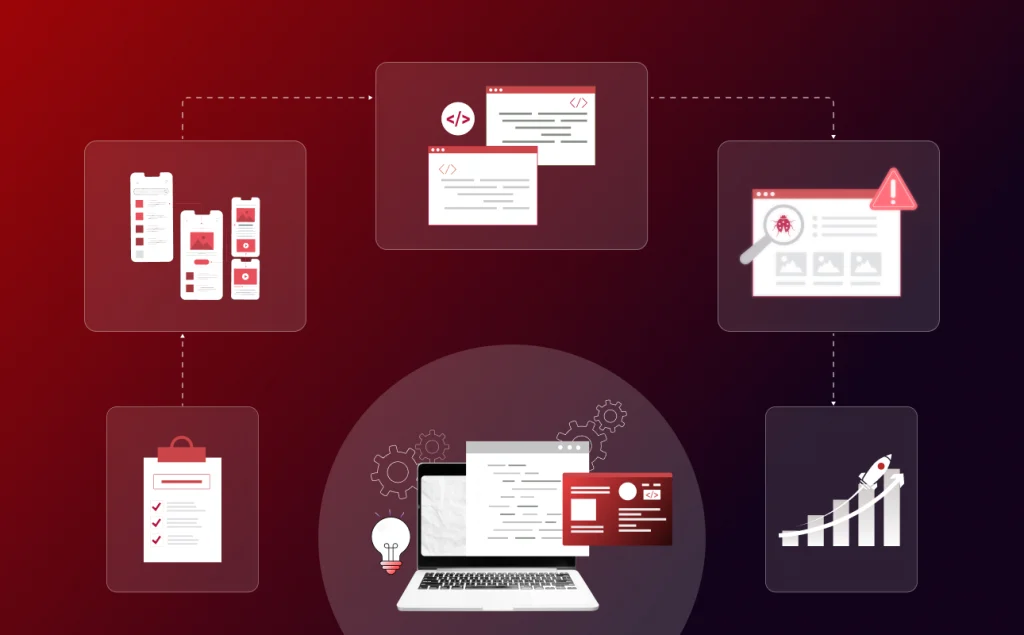
You can burn half a seed round before realizing users didn’t need the first version. Early decisions on scope, sequencing, and architecture cause the damage, and teams working with Bytes Technolab, an AI-first Product Engineering partner, move from idea fog to a validated launch path.
Why Most Founders Get Product Development Wrong Before They Even Start
Most early mistakes in product development happen before a team writes a ticket or opens Figma. The failure point is poor sequencing of decisions, not code quality.
Founders treat product development like a straight path from idea to build. One wrong assumption can distort research, scope, hiring, and launch timing.
A common pattern appears early. A founder hires engineers, defines screens, and only then starts user interviews.
That sequence creates expensive certainty around the wrong problem.
Three mistakes are repeated often:
- Building before testing demand
- Pricing before defining value
- Picking a stack before the use case is clear
The UK digital economy contributes over £158 billion each year. That scale creates noise where polished products look like proof.
The harder truth is simple. Most products fail because product-market fit never arrives.
A better start is narrower.
- Define one user pain clearly,
- Test buying signals with ten to fifteen users
- Cut the first release to one job
A founder choosing between segments needs evidence, not a sprint plan. That decision shapes everything that follows, which in turn shapes how the real process works.
What Actually Happens in Digital Product Development
Digital Product Development works as a loop driven by evidence, not a fixed sequence. Each phase reshapes what comes next.
The textbook model hides this reality. Validation changes scope, design changes priorities, and engineering changes feasibility before sprint one begins.
A real journey looks like this:
- Discovery sharpens the problem
- Design exposes gaps
- Engineering adjusts feasibility
- Feedback reshapes priorities
This shifts the core question. Founders stop asking what comes next and start asking what must change.
Why does the real process keep looping back?
It loops because each phase produces new evidence that should change decisions. Ignoring that evidence locks teams into the wrong path.
A B2B SaaS founder targeting NHS suppliers may identify three roles early. Testing may show that only one role matters for the first release.
That shift saves cost and protects focus.
Structured discovery reduces development waste by 30-50%. That saving matters when the runway is limited, and investors expect disciplined execution.
The process works as a rhythm, not a checklist. That rhythm begins with the phase where most savings happen.

The Critical First Phase: Product Discovery That Saves Time, Cost, and Failure
Discovery is the phase that determines whether a product should be built at all. It converts assumptions into decisions that shape every downstream action.
Many teams treat discovery as a workshop. In practice, it defines demand, workflows, scope, and risk before any build begins.
A strong discovery phase covers:
- User problem and urgency
- Buying trigger and pricing logic
- Workflows and feature priorities
- Delivery risks across data and compliance
What should product discovery prove before build starts?
It should prove the first user, the core job, and what can wait. Without this, the build team has to guess.
A field service startup may assume scheduling drives value. Interviews may show proof of job completion, which drives payment decisions.
That insight reshapes everything.
Discovery outputs that deserve sign off
- Clear problem statement for one user group
- Prioritized features for first release
- Clickable flows in Figma
- Technical risks logged early
The digital product design process becomes safer when these outputs exist. Without them, design becomes decoration instead of decision-making.
Bytes Technolab supports founders at this stage by tightening the scope and aligning user paths with execution. Once discovery is clear, design and engineering move in the same direction.
From Design to Build: How Digital Product Engineering Actually Works
Design transitions into engineering when every decision carries delivery meaning. Each screen maps to data, logic, and system behavior.
A polished prototype can hide missing states and unclear data flows. Engineering exposes what must change before development starts.
Good Digital product engineering services treat design and engineering as one system. Teams test decisions together before sprint commitments.
Before the build starts
- Confirm success, error, and empty states
- Validate architecture for the first 12 months
- Define analytics events early
During sprint planning
- Track frontend and backend dependencies
- Clarify acceptance criteria in tickets
- Assess third-party integrations
A UK payments workflow may appear simple. Refund logic, audit history, and data handling often define real complexity.
Product Design Services and engineering must share one view of reality. When design survives technical review, the build moves with clarity, leading to deeper decisions that shape outcomes.
The Hidden Decisions That Define Product Success or Failure
Product outcomes are shaped by early decisions that seem minor at the time. These decisions compound as the product grows.
Product Strategy Experts focus on choices that affect future flexibility. The first release defines what later versions must inherit.
High-impact decisions include:
- Choosing speed without understanding tradeoffs
- Mixing pilot needs with scale needs
- Delaying analytics setup
A startup building for five pilot clients may later need self-serve onboarding for hundreds of clients. Early assumptions can slow every future release.
The iteration strategy is another gap. Teams promise improvements after launch but lack tracking, interviews, and rules for change.
Bytes Technolab supports founders in making these decisions early, while change is still affordable. These choices shape future budgets, which makes structure essential.
How to Structure Your Product Development Journey (Without Wasting Budget)
A strong structure starts with proof, then moves to MVP, then scales after real usage signals. This order protects capital and sharpens execution.
Founders lose money by building too early or skipping key decisions. Both paths lead to rebuilds and delays.
A practical structure looks like this:
- Run discovery and narrow the use case
- Define an MVP around one outcome
- Build for real feedback
- Scale after traction appears
A founder selecting a product development partner in UK should also evaluate how the product development company works beyond its portfolio. The partner must explain how decisions move from research to backlog to measurable learning.
Key questions include:
- What happens when the scope changes mid-project
- Who owns decisions during trade-offs
- What signals justify scaling
Digital Product Development services work best when they reduce uncertainty before increasing spend. This shifts launch from an endpoint to the first real test.

From Idea to Launch: Building with Clarity, Not Guesswork
A product rarely fails because the idea lacked promise. It fails because the path from idea to launch was shaped by guesswork instead of evidence.
The priority becomes clear: validate first, define scope with discipline, design with delivery intent, and build only what the market will test.
Bytes Technolab supports startups, scale-ups, and mid-enterprises with structured discovery, aligned design, and execution tied to outcomes.
This ensures every decision connects to user value and measurable progress.
The next step does not require more effort. It requires sharper direction and a clearer path forward.
Frequently Asked Questions
Digital product development runs through four phases: Discovery, MVP build, iteration, and scale. Discovery produces the vision, user flows, and scoped roadmap. MVP build ships the core value exchange. Iteration refines against real user signals. Each phase gates on a specific question before the next begins.
Digital product development services cover the full build lifecycle: product discovery, UX and interface design, frontend and backend engineering, quality assurance, and post-launch iteration. The best providers also include architecture review and MVP scoping as structured deliverables, not assumptions carried silently into the build.
Most product development timelines run three to nine months from discovery to MVP launch, depending on scope and team size. Discovery typically takes two to four weeks. Teams that skip discovery don’t save those weeks. They spend them twice, resolving scope debates mid-sprint at a higher cost.
The digital product design process starts with discovery: mapping user problems and scoping decisions before any interface is drawn. It matters because teams that skip it build the right-looking product for the wrong brief. That gap typically surfaces at beta, six to eight weeks into a build that can’t be easily reversed.
Look for a discovery-first process, not just technical capability. A strong product development company produces a scoped MVP and technical roadmap before any engineering begins. Ask how they handle scope changes and what their discovery output looks like. Build-only vendors rarely flag the brief gaps that cost the most.
A Product Discovery Workshop with experienced Product Strategy Experts produces five outputs: vision alignment, validated user flows, technical feasibility, scoped MVP, and a phased roadmap. It typically runs two to four weeks. Teams that complete it enter sprint one with every expensive decision already documented and agreed.
Digital product engineering services own the outcome, not just the output. Standard development executes a brief. Product engineering questions it, flagging when a technical decision creates commercial risk downstream. That difference shows up at launch: one team ships code on schedule, the other ships a product that holds up under real use.
Bytes Technolab starts every UK startup engagement with a Product Discovery Workshop before any engineering sprint begins. The team produces a locked vision, scoped MVP, and technical roadmap using React, Node.js, and Python stacks. Founders enter the build phase with documented decisions, not open questions carried into sprint one.
Yes, and it’s one of the most common engagements Bytes Technolab runs with UK scale-ups. The team conducts an architecture and scope review, identifies the decisions that are creating drag, and produces a corrected roadmap. Most teams recover a clean build path within two to three weeks of structured review.

Abhishek Amin
Technical Writer
Abhishek Amin is an avid content strategist and marketing expert, specializing in AI-first digital product engineering and MVP development. He possesses acute awareness of the needs of startups and enterprises to scale by leveraging cutting-edge technologies like AI. His content marketing skills work as the gatekeeper, leading brands to engage with the engineering team and build game-changing digital products.
Table Of Content
- Why Most Founders Get Product Development Wrong Before They Even Start
- What Actually Happens in Digital Product Development
- Why does the real process keep looping back?
- The Critical First Phase: Product Discovery That Saves Time, Cost, and Failure
- What should product discovery prove before build starts?
- From Design to Build: How Digital Product Engineering Actually Works
- The Hidden Decisions That Define Product Success or Failure
- How to Structure Your Product Development Journey (Without Wasting Budget)
- From Idea to Launch: Building with Clarity, Not Guesswork