


 March 25, 2026
 2 mins to read
In today’s market, simply building a product or launching an MVP is no longer sufficient. Users compare you with the best tools they’ve ever used, not just your direct competitors. They expect products that feel smart, personal, and one step ahead of their needs.
At the same time, markets are moving faster than most teams can follow. New AI tools, changing user behavior, and shifting business models put constant pressure on your roadmap. Companies that adopt AI-First Product Engineering are able to learn faster, react quicker, and grow with more confidence, while others struggle to keep up.
In this blog, you’ll see what AI-First Product Engineering really means in practical terms. You’ll understand why it is becoming a key driver of success for startups, scale-ups, and mid-size enterprises. You’ll also see how working with the right AI-first partner can make your journey much smoother, from first idea to live, intelligent product.
Bytes Technolab fits into this story as an AI-first Product Engineering and Digital Transformation partner. The team helps businesses at different stages build intelligent, scalable, and modern digital products, without turning everything into a risky, big-bang rewrite. The goal is to bring AI into the heart of how you design, build, and grow products, in a way that feels controlled and grounded in real outcomes.
What Is AI-First Product Engineering?
In this section, we’ll keep things simple and clear. Before talking about tools or models, it’s important to define what AI-First Product Engineering actually is and how it differs from “adding AI features” on top of an existing product.
You’ll see how this approach changes your product strategy, design, and engineering choices. You’ll also see how it connects to AI-Driven Product Engineering, digital product engineering, and AI-first software engineering as a whole.
Moving from Features to AI-First Thinking
Most teams start with features. They create a list of what the product should do, they design screens, and then they ask, “Where can we add AI?” In practice, this usually leads to small, isolated AI features that don’t change the core of the product.
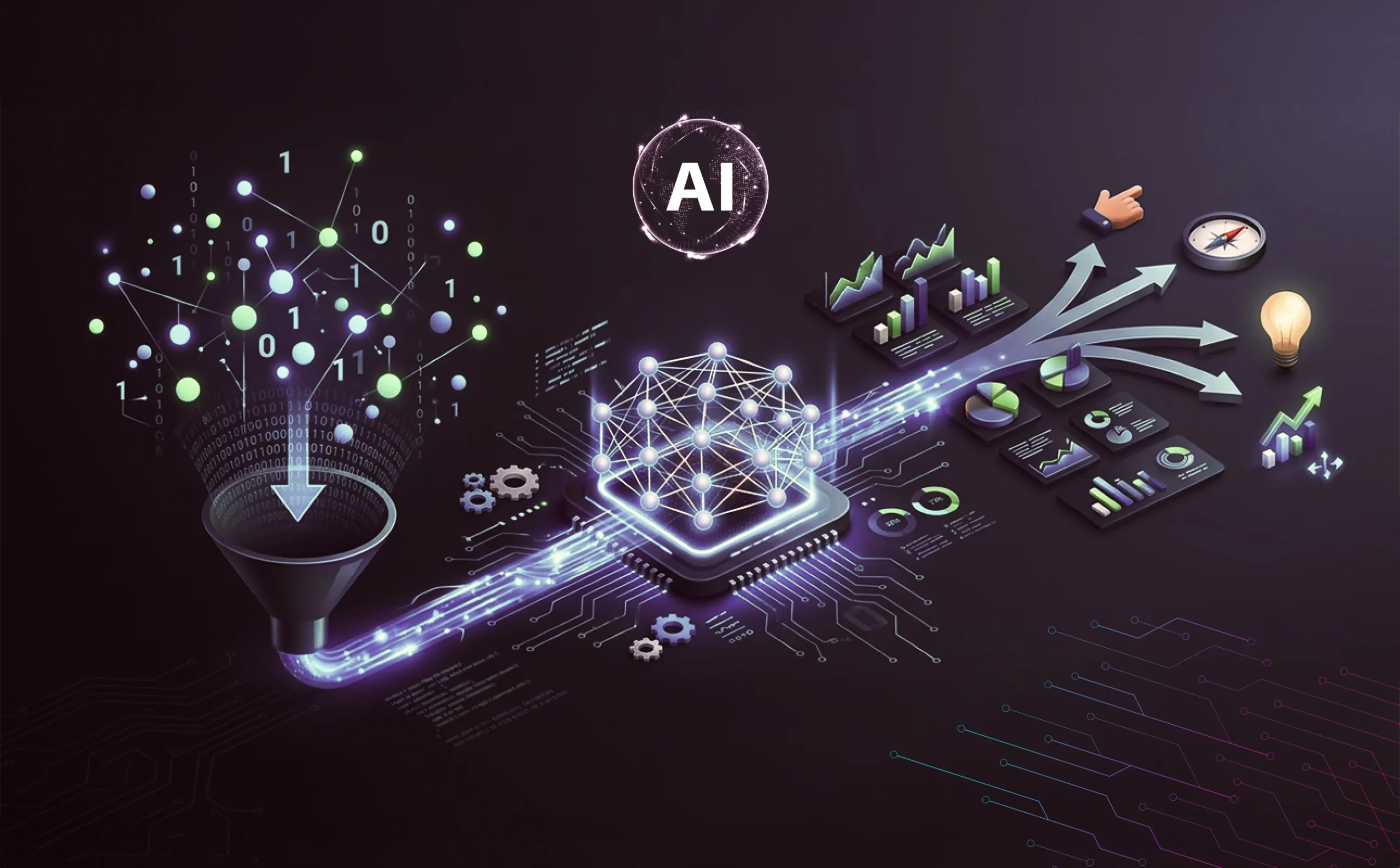
AI-First Product Engineering flips that logic. Instead of asking where AI can be added, you start by asking how intelligence, automation, and learning can shape the product from day one. You plan the full lifecycle of the product around data, AI insights, and adaptive behavior.
In an AI-first approach to product engineering, AI is not a widget. It is part of how you collect data, how you understand users, how you make product decisions, and how the product behaves for each person. This is the real difference between a basic “AI feature” and true AI-Driven Product Engineering.
Core Pillars of AI-Driven Product Engineering
To make this more concrete, it helps to think in terms of pillars. These pillars guide how you plan, design, and build your product. They also guide how your engineering team sets up systems and processes.
Data-Driven Decisions
In many companies, feature decisions are driven by opinions, internal politics, or what a competitor just released. With AI-First Product Engineering, decisions are anchored in data and AI-generated insights.
You use quantitative data (usage metrics, funnels, cohorts) and qualitative data (feedback, recordings, surveys) as the base for what to build next. AI models help you see patterns you might miss, such as which user journeys lead to long-term retention or which features drive real revenue.
This mindset affects product engineering day to day. Roadmaps, UX changes, pricing experiments, and rollouts are guided by signals from the product, not just the loudest voice in the room.
Learning Systems Over Time
Traditional products are often built like static tools. You define the flows once, ship them, and then maybe change them every few months. An AI-first product behaves more like a living system.
With AI-Driven Product Engineering, the product learns from every interaction. It adjusts recommendations, changes workflows, and tunes predictions as new data comes in. Over time, the system becomes more accurate and more helpful, instead of staying frozen.
This idea connects directly to AI-first software engineering. Your engineering choices have to support continuous learning: models that update, pipelines that handle new signals, and features designed to adapt without breaking the user experience.
Intelligent User Experiences
Users today quickly notice when a product feels generic. They might see the same content as everyone else, get the same offers, or follow the same long path to complete a task. In contrast, intelligent experiences feel personal and efficient.
AI-First Product Engineering focuses heavily on this layer. The product uses data to understand context: who the user is, what they did before, and what they might need next.
This can show up as:
- Personalized recommendations and content.
- Smart search that understands intent, not just keywords.
- Context-aware workflows that hide complexity when not needed.
- Proactive alerts or suggestions that save time.
Here, AI is not a “wow” feature. It’s what makes the whole experience feel natural and helpful.
Engineering Foundation for AI-First Software Engineering
None of this works without the right engineering foundation. AI-First Product Engineering depends heavily on how you handle data and how you structure your systems.
A strong foundation usually includes:
- Clean, reliable data pipelines so data flows from products, apps, and services into your AI systems without noise and gaps.
- Scalable architecture so you can process more data, serve more users, and add more AI-driven features without a full rebuild.
- AI/ML models as first-class components in your architecture, not small scripts hidden at the edge.
- Continuous monitoring and feedback loops so you track model performance, user behavior, and business outcomes, then refine your models and features.
This is where digital product engineering meets AI-first software engineering. You are not just hosting models somewhere. You are building your product and engineering practices around the idea that intelligence is part of the core system.
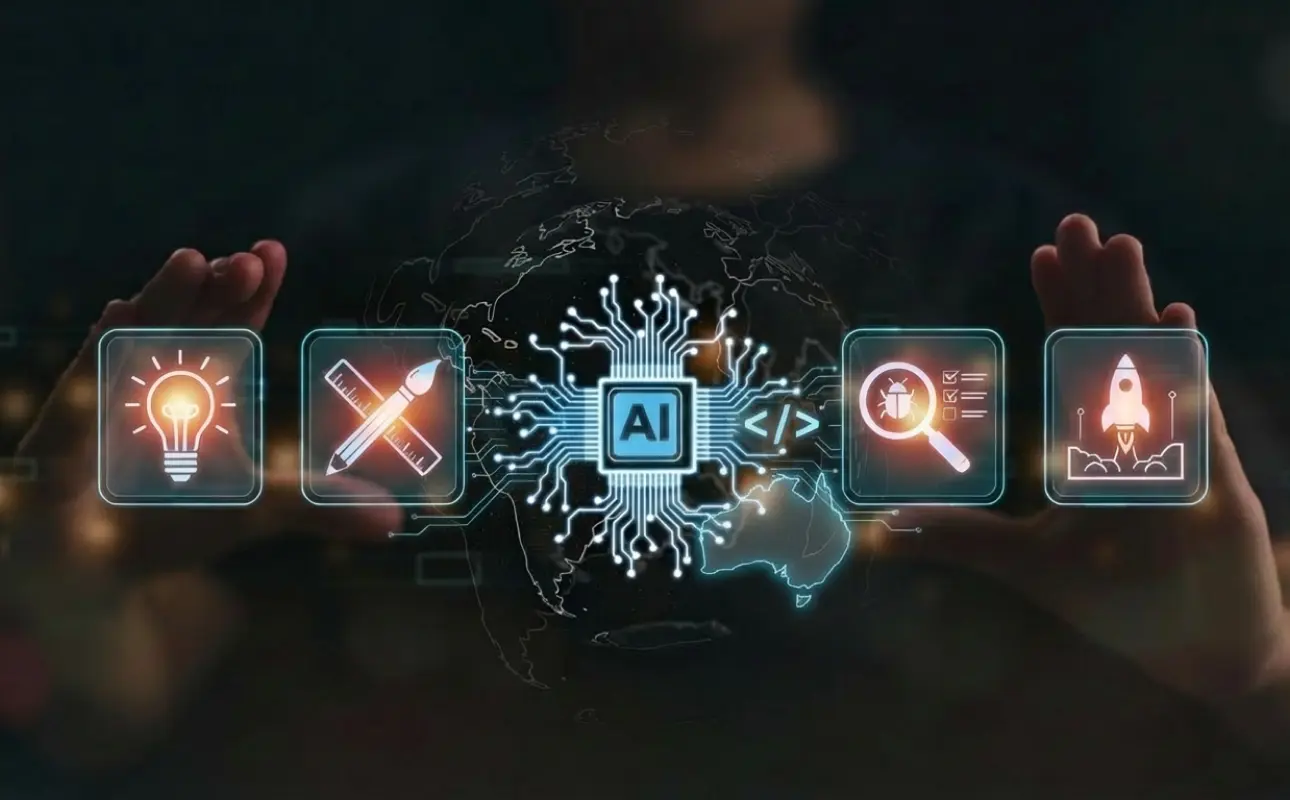
AI-First Product Engineering, then, is both a mindset and a process. It’s not a plugin or a single AI feature. It is a way to plan, design, build, and operate products where data, learning, and intelligent behavior are central to how value is created.
Why AI-First Product Engineering Is Your Key to Success
Now that you have a clear definition, it’s useful to look at why AI-First Product Engineering matters in real business terms. The impact is not the same for every company stage.
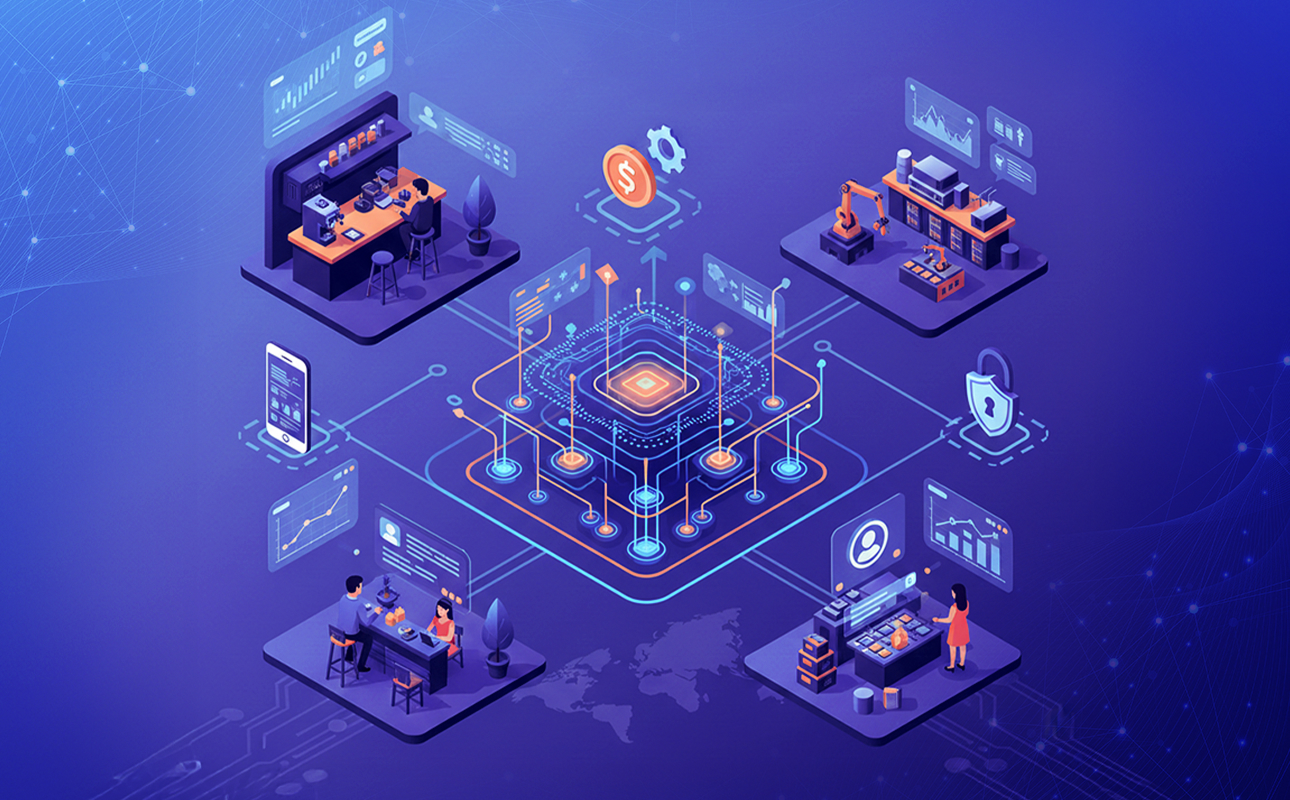
Startups, scale-ups, and mid-size enterprises face different pressures, but they share one challenge: how to make better decisions faster while serving users more intelligently. AI-Driven Product Engineering gives each of them a different kind of edge.
For Startups – Learn Fast and Find Fit Faster
If you are building a startup, your main risk is not competition. It is running out of time or money before you reach product–market fit. To survive, you need to learn quickly from the market and adjust fast.
With AI-First Product Engineering, every click, session, and feedback item becomes part of a learning loop. You don’t just collect analytics. You use AI models to spot patterns and guide your decisions.
Real User Insights come from more than dashboards. AI can group users based on behavior, predict who is likely to convert, and detect friction points in your onboarding. You see which parts of your product actually matter.
Smart Experimentation makes it easier to test features without guessing. Instead of betting big on a large release, you run smaller experiments and let AI help you analyze which variation drives better engagement, retention, or revenue.
Early Prediction is especially powerful. You can predict which users are at risk of churning, which features drive long-term value, or which leads are more likely to convert. This makes your roadmap and sales motions sharper.
Lean Team, High Leverage may be the biggest gain. With AI models and intelligent automation, a small product team can act like a much larger organization. You can prioritize work more accurately, automate repetitive tasks, and focus human effort on creative and strategic decisions.
For a founder or product owner, this means you can learn from reality instead of guessing. You make fewer blind bets and move toward product–market fit with more signals and less noise.
For Scale-Ups – Deep Optimization and Confident Scaling
Scale-ups have found some level of product–market fit, but now face a different set of problems. Growth must be sustained without breaking the user experience, the technology stack, or the unit economics.
AI-First Product Engineering helps you move from “growing fast” to “growing wisely,” with strong visibility into what drives value.
Unified Intelligence becomes essential at this stage. Your users interact across web, mobile apps, support channels, and sometimes partner platforms. With AI-driven, unified data and models, you can see the full journey across touchpoints instead of isolated snapshots.
Personalization at Scale is a natural next step. You segment users more intelligently and tailor journeys, offers, and messaging across many cohorts. Instead of managing hundreds of hard-coded rules, AI handles the complexity while your team sets boundaries and goals.
Smart Rollouts and Experiments help you manage risk. You can release features gradually, to specific user segments or geographies, and use AI to detect which changes are improving key metrics. Poorly performing variations can be rolled back quickly.
Predictive Reliability is another important benefit. AI models can help forecast system load, identify abnormal patterns before an outage, and detect performance regressions early. This reduces downtime and supports confident scaling.
Impact-Based Priorities can change internal discussions. Instead of debating which feature “feels” important, your roadmap is driven by predicted impact on engagement, retention, or cost. AI-First Product Engineering gives product and engineering leaders more solid ground for trade-offs.
For scale-ups, this approach reduces chaos. It gives teams a clear way to scale complexity, traffic, and product scope without constantly firefighting.
For Mid Enterprises – Stay Modern, Competitive, and Relevant
Mid-size enterprises often sit between legacy world and modern, AI-native competitors. They may have strong customer relationships and solid products, but risk losing relevance if they don’t evolve.
AI-First Product Engineering can help them modernize step by step, without throwing away everything that already works.
Legacy + AI Balance is often the first challenge. Many mid-size companies have existing systems that are stable but not very flexible. By adding an AI layer on top of those systems, you can introduce intelligence into search, recommendations, routing, and decision support without immediately replacing core platforms.
Process Automation is another high-impact area. Manual reviews, approvals, triage, and routing can often be supported or replaced by AI recommendations. Humans still make final calls for sensitive cases, but their time is focused where it matters most.
Better Customer Experience is usually visible quite quickly. Smarter search, AI-powered chatbots, intelligent ticket routing, and personalized content can make existing products feel much more modern. Users notice when they get answers faster, find what they need quickly, and feel recognized by the system.
Faster, Better Decisions come from AI models that analyze past patterns and suggest “what to do next.” This might mean which customer should get a retention offer, which invoice needs a second review, or which product line deserves more investment.
In this context, digital product engineering and digital product development help bridge the old and new worlds. Paired with thoughtful digital transformation consulting, AI-First Product Engineering becomes a way for mid-size enterprises to stay competitive without taking on uncontrolled risk.
How AI-First Product Engineering Works in Practice
So far, we’ve focused on concepts and benefits. Now it’s time to look at how AI-First Product Engineering actually works in day-to-day practice.
This section walks through a simple, high-level flow. The goal is not to cover every technical detail, but to give you a clear picture of the main steps, so AI-first thinking feels concrete and manageable.
From Idea to Intelligent Product – A Practical Flow
The journey from idea to intelligent product usually passes through a few core stages. Different companies may use different names, but the underlying flow is similar.
Discovery and Strategy
Everything starts with clarity. You first need to understand business goals, user journeys, and the current state of your data and systems.
During discovery, product teams and stakeholders align on questions like:
- Who are our key users and what problems are we solving for them?
- Which business metrics matter most in the next 12–24 months?
- What data do we already have, and what are we missing?
AI-First Product Engineering treats this stage as more than a workshop. Strategy here means aligning product engineering with outcomes. You decide where AI can support your goals and how success will be measured.
Data Foundation
Without good data, even the best AI models fail. So the next step is building a solid data foundation.
This usually involves:
- Mapping data sources across products, apps, and third-party tools.
- Setting up data collection methods that are reliable and privacy-aware.
- Cleaning and normalizing data so it can be used by AI/ML models.
The result is a set of data pipelines that your team trusts. This is the backbone of any AI-First Product Engineering approach. When product and engineering teams know that data is accurate and timely, they can move faster and rely more on AI insights.
Identifying High-Impact AI Use Cases
Once the data foundation is in place, you can identify where AI will create real value. Not every process needs heavy AI, and not every feature benefits from prediction or personalization.
High-impact use cases often cluster around areas like:
- Personalization and recommendations for content, products, or workflows.
- Predictions around churn, conversion, fraud, or demand.
- Automation of routine tasks, such as triage, routing, or classification.
- Smart search that understands context and intent.
At this stage, ai ml services come into play. Your team, or a partner, helps you assess which use cases are technically feasible, which are high value, and how to scope them for early wins. You then prioritize based on impact, effort, and alignment with your strategy.
Engineering and Integration
Next, it’s time to bring everything together inside your product. This is where digital product development and digital product engineering play a central role.
Engineers integrate AI models with back-end services, APIs, and data pipelines. They connect those models to front-end and mobile experiences in ways that feel natural for users. The goal is to make AI an invisible part of the product flow, not a separate add-on.
Key considerations here include:
- How to serve AI predictions or recommendations with low latency.
- How to design fallbacks if a model is unavailable or uncertain.
- How to keep user experiences clear, even when driven by complex logic.
Good engineering and thoughtful UX work together. The result is a product that feels simple and intuitive on the surface, even though it runs on sophisticated AI logic underneath.
Continuous Learning and Optimization
Once your AI-first features are live, the work is not finished. In many ways, it’s just starting.
AI-First Product Engineering assumes that the system will keep learning. This means:
- Setting up feedback loops where user actions feed back into models.
- Running A/B tests to compare different variations and measure impact.
- Retraining models regularly as new data and patterns appear.
- Monitoring quality and performance so you catch drift early.
Over time, this loop shapes the product. You discover new segments, uncover new use cases, and refine how features behave. The result is a product that gets better the more it is used, not one that grows stale after launch.
Bytes Technolab – Your AI-First Product Engineering & Digital Transformation Partner
Up to this point, we’ve described the concepts in a neutral way. Now let’s talk briefly about how Bytes Technolab fits into this landscape, in a way that stays grounded in real work rather than big promises.
Bytes Technolab positions itself as a partner for companies that want to build or evolve products with AI-first thinking, but also value stability, pragmatism, and clear business outcomes. The team works with startups, scale-ups, and mid-enterprises that are serious about intelligent digital products and modern engineering.
In practical terms, Bytes Technolab supports clients across the full lifecycle of product engineering:
- Product strategy and discovery, where teams work with your stakeholders to clarify goals, user journeys, and AI opportunities.
- Prototyping, UI/UX, and product design, ensuring that AI features feel intuitive, transparent, and user-centered.
- Digital product development and MVP development, where ideas are turned into working products that can be tested in real markets.
- SaaS engineering and cloud-native architecture, helping products scale reliably with modern infrastructure and deployment practices.
- AI & Data Intelligence, including Generative AI, Retrieval-Augmented Generation (RAG), NLP, computer vision, and broader ai ml services.
- Digital transformation consulting, application modernization, cloud engineering, and automation to help existing systems become AI-ready.
The approach is collaborative. The Bytes Technolab team works closely with founders, product heads, and CTOs to:
- Identify and prioritize AI use cases that match real business goals.
- Make the product architecture ready for AI-first features, not just basic integrations.
- Build and maintain data pipelines that support high-quality AI and analytics.
- Integrate AI models into live products and set up continuous measurement and optimization.
Over the years, their teams have partnered with founders, product leaders, and CTOs to bring AI-first thinking into the heart of their product roadmap, not as a side project but as the way they build and scale.
In this work, Bytes Technolab also offers product engineering consulting and services. These are not separate from AI-first thinking. Instead, they are the structure that holds everything together: processes, architecture, and delivery methods that allow AI-driven products to be shipped, improved, and scaled in a predictable way.
The overall goal is simple: make AI-First Product Engineering a practical reality for your organization, at a pace and scope that matches where you are today.
A Single Decision That Shapes Your Next Product Chapter
AI-First Product Engineering is the shift from static, one-size-fits-all tools to products that learn, adapt, and make smarter use of data every day. For startups, it speeds the path to product–market fit. For scale-ups, it makes growth more sustainable and efficient. For mid-size enterprises, it offers a way to modernize without losing what already works.
Choosing the right partner matters because this shift touches strategy, design, engineering, and data all at once. A partner like Bytes Technolab, with experience across AI-Driven Product Engineering, digital product engineering, and digital transformation, can help you move with more clarity and less guesswork. When you bring AI-first thinking into your next product chapter, you are not just adding features. You are changing how your product learns, competes, and creates value over time.
Frequently Asked Questions
AI-First Product Engineering means you design your product with intelligence at the centre, not as a last-minute add-on. Your data, features, and user journeys are planned so the product can learn over time. This helps you move faster, test better, and give smarter experiences to users.
AI-Driven Product Engineering is about using AI across the full product lifecycle. It shapes discovery, design, development, and growth. Instead of building a single chatbot or recommendation widget, you use AI to guide decisions, automate parts of the product, and continually improve based on real usage.
Digital product engineering gives you the solid base you need before you go heavy on AI. It covers the way your product is planned, designed, and coded. When this base is strong, it becomes much easier to plug in AI models, scale experiments, and avoid constant rewrites later.
Product engineering is about more than just writing code. It connects business goals, user needs, data, and technology into one clear flow. When you treat it as a discipline, your features line up better with outcomes, your architecture stays cleaner, and AI projects don’t feel like random side experiments.
Bytes Technolab usually starts by understanding where you are today and what you already have in place. Then they look at small, safe areas where AI can add quick value. This helps you move into AI-first software engineering step by step, without risking your live product or users.
Yes, because they are used to working with teams that already have systems, customers, and internal processes. Instead of suggesting a full rebuild, they help you plan digital product development around your current reality. You get a clear path from idea to working product that respects what is already running.
You do not need a large internal data team to start. Bytes Technolab brings both technical and business experience when it offers digital transformation consulting. They help you see where AI makes real sense, how to fix data gaps, and how to move in phases instead of one big risky bet.
The right time is when you have at least some stable usage and clear business goals. If you know what you want to improve, like churn, conversions, or support load, AI ML services can help. Starting too early is risky, but waiting too long can also mean lost opportunities.
Bytes Technolab does not treat AI as a shiny add-on. They combine strategy, UX, engineering, and data thinking, so the AI work actually fits your product. You get a partner that cares about long-term outcomes, not just a one-time demo or proof of concept that never ships.
Table Of Content
- What Is AI-First Product Engineering?
- Moving from Features to AI-First Thinking
- Data-Driven Decisions
- Learning Systems Over Time
- Intelligent User Experiences
- Engineering Foundation for AI-First Software Engineering
- Why AI-First Product Engineering Is Your Key to Success
- For Startups – Learn Fast and Find Fit Faster
- For Scale-Ups – Deep Optimization and Confident Scaling
- For Mid Enterprises – Stay Modern, Competitive, and Relevant
- How AI-First Product Engineering Works in Practice
- From Idea to Intelligent Product – A Practical Flow
- Discovery and Strategy
- Data Foundation
- Identifying High-Impact AI Use Cases
- Engineering and Integration
- Continuous Learning and Optimization
- Bytes Technolab – Your AI-First Product Engineering & Digital Transformation Partner
- A Single Decision That Shapes Your Next Product Chapter