



 May 26, 2026
 2 mins to read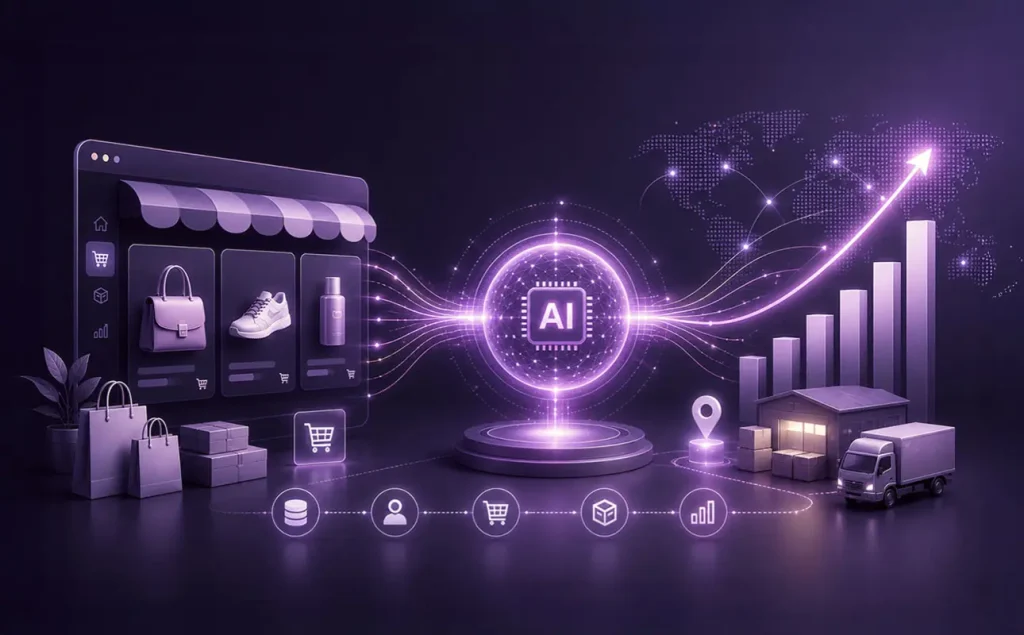
Retail startups operate in highly competitive environments where scaling becomes the real challenge. Around 34% of small businesses (as per the Exploding Topics report) fail due to poor product-market fit.
What works at 50 orders fails at 500, not due to lack of demand but slower decision-making. As customer behaviour, pricing, and inventory shift constantly, static systems fall short.
This is where artificial intelligence in retail enables faster, smarter decisions.
Why Retail Startups Struggle to Scale Without AI
Most retail startups begin with simple systems:
- Fixed pricing
- Manual inventory planning
- Rule-based recommendations
These systems work in the early stages. But as the business grows, cracks start to appear.
Most retail AI projects fail because they automate the wrong things, not because the technology underperforms. The first collapse usually happens when teams chase impressive demos instead of workflows that directly affect revenue, retention, or margin.
What Breaks First When Retail Startups Add AI Without Strategy?
The customer experience is the first to suffer when there is no clear AI strategy guiding implementation. A recommendation engine that suggests items that are out of stock makes shoppers ignore all suggestions. A pricing algorithm that changes too quickly damages trust. A chatbot that can’t smoothly connect to a human creates support tickets instead of fixing issues. All these problems add up because retail customers expect consistency from brands.
Retail Founders Confuse AI Capability With Business Impact
Because demos show what’s possible under ideal conditions. A visual search system trained on clean product images performs brilliantly in presentations. Put it in a mobile app where customers photograph items in poor lighting from odd angles, and accuracy drops to unusable levels. The gap between demo performance and production reality kills most retail AI projects.
AI in Retail Businesses Isn’t About Technology: It’s About Margin, Speed, and Retention
Many founders assume AI is just another layer of automation, but that is only part of the picture. Automation handles tasks, while AI improves decision-making. This is the real role of artificial intelligence in retail. Instead of relying on fixed workflows, AI-enabled systems learn from the data, adapt to changing conditions, and optimise outcomes over time.
Most retail startups struggle when they approach an AI-powered product for retail development as a feature checklist rather than a strategic growth decision. The focus should shift from adding AI to identifying where it can create the most impact:
- Which workflow, if improved, can directly increase revenue?
- Where can better decisions reduce cost or inefficiency?
- Which process slows growth today and needs intelligence, not more effort?
What Retail Founders Need To Define Before Building AI
Before building AI, retail founders need clarity on what exactly they are trying to improve, how success will be measured, and whether their data and costs support the solution.
- The Workflow AI Will Replace Or Improve: AI will surface products based on browsing history, purchase patterns, and inventory, replacing weekly manual updates with dynamic hourly curation.
- The Measurable Outcome Within 90 Days: Focus on increasing average order value by 8–12%, reducing cart abandonment by 15%, or lowering inventory costs by 10% via better demand prediction, not just ‘improve customer experience’.
- The Data Quality Threshold For Accuracy: AI models trained on incomplete catalogues, inconsistent categories, or missing attributes produce unreliable outputs. Data cleaning isn’t optional; it’s the foundation for effective AI.
- The Cost Structure Tied To Usage: Visual search costs increase with image processing volume. Recommendation engine expenses grow with catalogue size and request rate. Forecast model costs depend on SKU count and update frequency. Know your unit economics before scaling.
What Work Should AI Handle Instead of Fixed Rules
AI is most valuable in situations where decisions change every time, but the goal remains the same. These are areas where fixed rules fail because they cannot adapt to real-time conditions. Instead of relying on static logic, AI uses context, data, and patterns to make better decisions.
This typically includes:
- Pricing adjustments based on demand
Prices adapt to changes in demand, competition, and stock levels instead of staying fixed - Product recommendations based on behaviour
Suggestions improve based on what customers browse, click, and purchase - Inventory planning under uncertainty
Stock decisions are based on predicted demand rather than past trends alone
These are not repetitive tasks. They are dynamic decisions that require context, where AI has the greatest impact.
AI Product Engineering Services Lifecycle That Actually Works for Retail
AI product engineering services for retail follow a different sequence than traditional development. Discovery must validate data quality alongside demand. Prototypes must test model accuracy under real conditions. MVPs must include cost controls, fallback logic, and performance monitoring from day one.
Discovery: Identifying High-Impact AI Use Cases
At this stage, the focus shifts away from features and toward impact. The priority is to identify where AI can improve revenue or efficiency, understand customer behaviour patterns, and define clear, measurable outcomes. This is where strong AI product engineering services begin to shape the product in the right direction.
AI MVP Services: Proving Value Early
With AI MVP services, startups validate ideas before scaling.
Instead of building everything, they:
- Test one core use case
- Measure impact (conversion, retention, revenue)
- Refine based on real data
This reduces risk and improves clarity.
Digital Product Development: Building Scalable Systems
Once validated, Digital product development focuses on:
- Integrating AI into workflows
- Building scalable architecture
- Aligning systems with growth
This stage transforms ideas into real products.
Iteration: Improving Intelligence Over Time
AI products in retail must improve continuously as patterns evolve. A recommendation engine trained on summer browsing data will underperform in winter. A search ranking algorithm optimised for desktop behaviour may fail on mobile, where intent signals differ.
Budget for quarterly retraining, A/B testing new model versions, and refinement based on what customers actually click, buy, and return. Static AI dies slowly in retail, where trends shift monthly.
This is where AI product engineering services continuously add value.
Scale: Growing Without Increasing Complexity
Scaling is not just about handling more users.
It is about:
- maintaining performance
- controlling cost
- improving outcomes
This is where strong SaaS product development, combined with AI, creates long-term advantage.
When should you build a prototype before an MVP?
When AI accuracy is unproven for your specific use case, generic recommendation engines work differently for fashion, electronics, and groceries. A prototype tests whether your product catalogue, customer base, and purchasing patterns support the AI approach before you invest in full infrastructure.
Where SaaS Product Development Fits in Retail AI
Retail platforms are increasingly built using SaaS product development models.
AI changes how these platforms operate. Pricing becomes more flexible, recommendations improve continuously, and workflows become automated.
This allows startups to scale operations without increasing manual effort.
AI-driven SaaS platforms are not static. They evolve with use, making them more effective over time.
AI-native retail SaaS platforms don’t just add intelligence as a feature; they build it into the core of how the product operates. These systems continuously learn from the data, adapt to user behaviour, and improve decision-making in real time. The difference becomes clear in how key retail functions are handled.
- Semantic Search, Not Keyword Matching
AI understands customer intent, not just words. A search like “black dress for wedding” shows relevant options, not mismatched results. It improves by learning from user actions like clicks and purchases.
- Predictive Inventory Management
AI forecasts demand at the SKU level, suggests optimal stock levels, and flags risks like overstock or stockouts. This reduces costs, improves cash flow, and protects margins.
- Dynamic Pricing in Real Time
Prices adjust automatically based on demand, competition, stock levels, and seasonality. Unlike manual updates, AI-driven pricing reacts instantly, capturing better margins.
- Personalised Customer Communication
Instead of generic campaigns, AI tailors recommendations, reminders, and offers for each user. This improves engagement and significantly increases customer retention.
How to Choose AI MVP Services That Understand Retail Economics
Choosing the right partner is one of the most important decisions for a retail startup.
A strong digital product development provider focuses on understanding the business before building solutions. They identify high-impact use cases, validate ideas early, and design systems that can scale.
- Retail-Specific Experience: A strong partner understands category-level challenges such as perishables, fashion trends, and spec-heavy products, not just generic AI models.
- Data Audit First Approach: They analyse your catalogue, transactions, and customer data before recommending solutions, ensuring AI is actually feasible.
- Focus on Business Metrics: They prioritise outcomes like conversion rates, margins, and inventory efficiency over technical metrics alone.
- Understanding Retail Operations: They account for stockouts, returns, seasonality, and peak periods, such as sales events.
- Cost Transparency: They clearly explain ongoing AI costs, including inference and retraining.
- Integration Capability: They can connect AI with existing platforms such as Shopify, Magento, POS systems, and warehouse systems.
How Do You Separate AI Vendors From Retail Product Partners?
Ask how they’d handle model failure during peak trading. Vendors focus on accuracy, while partners consider fallback logic, human review workflows, and degradation strategies. This operational thinking decides if AI boosts or breaks your retail business.
Turn Smarter Decisions Into Scalable Retail Systems
Building an AI-driven retail product is not about adding more tools. It is about knowing where AI can actually make a difference.
At Bytes Technolab, we help startups bring clarity to this process. From identifying the right use cases to testing ideas early and building scalable systems, the focus stays on practical outcomes.
We work with your existing platforms and real business challenges, not just theory. The goal is simple. Help you make better decisions early, avoid costly rework, and build a product that grows smoothly as your business scales.
From Retail Idea to AI-Powered Scale: What Startups Should Do Next
Scaling a retail startup successfully requires more than speed. It requires clarity on what to build, when to build it, and how to make it scalable from the start. A structured approach helps avoid costly mistakes and ensures long-term growth.
- Focus on the Right System Early
Startups should prioritise building the right system from the beginning, not just adding more features as they grow.
- Address Scaling Challenges Early
Issues in pricing, inventory, and customer experience often start in early decisions. Fixing them later increases cost and complexity.
- Start with One High-Impact Use Case
Instead of solving everything, focus on improving one key area such as recommendations, pricing, or demand prediction.
- Validate Through AI MVP Services
Testing a focused use case helps confirm what works, reduces risk, and avoids unnecessary investment.
- Build with Structured Digital Product Development
Once validated, integrate AI into core workflows so the system can scale smoothly with growth.
- Reduce Risk and Move with Clarity
A structured approach helps startups avoid rework, control costs, and make better decisions.
- Build for Long-Term Growth
The goal is not to build more features but to build smarter systems that grow with the business.
Build Retail AI That Survives Market Pressure
Retail success is no longer about how fast you build. It is about how well you respond to change. As startups grow, the real challenge becomes making consistent decisions across pricing, inventory, and customer experience. Systems that cannot adapt quickly turn into bottlenecks.
Startups that scale successfully plan for this early by building products that learn from data and improve over time. Those who delay often rebuild under pressure.
Bytes Technolab works with retail startups to identify the right use cases, validate ideas, and build scalable AI systems that improve margins, retention, and operational efficiency as the business grows.
Prioritise AI that impacts conversion or margin. Use intelligent search to boost product discovery and conversion, recommendation engines to increase basket size, and demand forecasting to cut inventory costs. Focus on the workflow that costs you the most money or customers first. Visual search and chatbots can wait unless central to your category.
The biggest mistake is applying AI everywhere. Startups should focus on one high-impact use case first. Strong AI engineering services help prioritise the right problem over unnecessary features.
AI boosts margins through demand forecasting, reducing overstock and stockouts; dynamic pricing for higher payments; smarter inventory to cut costs; and automated markdowns to clear stock before obsolescence. It generally achieves a 3–8% margin gain in six months.
Startups do not need perfect data to begin. What matters is having usable data that can support a focused use case. A proper data audit helps determine readiness and identify gaps before development begins, ensuring that AI solutions are practical and sustainable.
Expect 60 to 90 days to see an impact from an AI MVP. Early gains are limited as models need data to improve. Simple features show faster results, while complex use cases take longer to deliver measurable ROI.
Bytes Technolab supports startups with AI discovery, data preparation, MVP validation, and scalable product development. Its goal is to create AI-powered retail products that enhance margins, customer experience, and operational efficiency, fostering long-term growth.

Bhumi Patel
Client Partner
Bhumi Patel is a Client Partner at Bytes Technolab, working with organisations across Australia and New Zealand to deliver real business outcomes through AI‑powered product engineering She helps teams modernise their systems, improve operational efficiency, and bring new digital products to life with confidence. With experience across project delivery, operations, and client onboarding, Bhumi acts as the link between business goals and technology execution. She partners with startups and established enterprises to shape practical, high‑impact solutions — from AI‑first MVPs and scalable SaaS platforms to Agentic AI systems, Generative AI initiatives, and intelligent product development.
Table Of Content
- Why Retail Startups Struggle to Scale Without AI
- AI in Retail Businesses Isn’t About Technology: It’s About Margin, Speed, and Retention
- What Retail Founders Need To Define Before Building AI
- What Work Should AI Handle Instead of Fixed Rules
- AI Product Engineering Services Lifecycle That Actually Works for Retail
- Discovery: Identifying High-Impact AI Use Cases
- AI MVP Services: Proving Value Early
- Digital Product Development: Building Scalable Systems
- Iteration: Improving Intelligence Over Time
- Scale: Growing Without Increasing Complexity
- When should you build a prototype before an MVP?
- Where SaaS Product Development Fits in Retail AI
- How to Choose AI MVP Services That Understand Retail Economics
- Turn Smarter Decisions Into Scalable Retail Systems
- From Retail Idea to AI-Powered Scale: What Startups Should Do Next
- Build Retail AI That Survives Market Pressure