

 April 2, 2026
 2 mins to read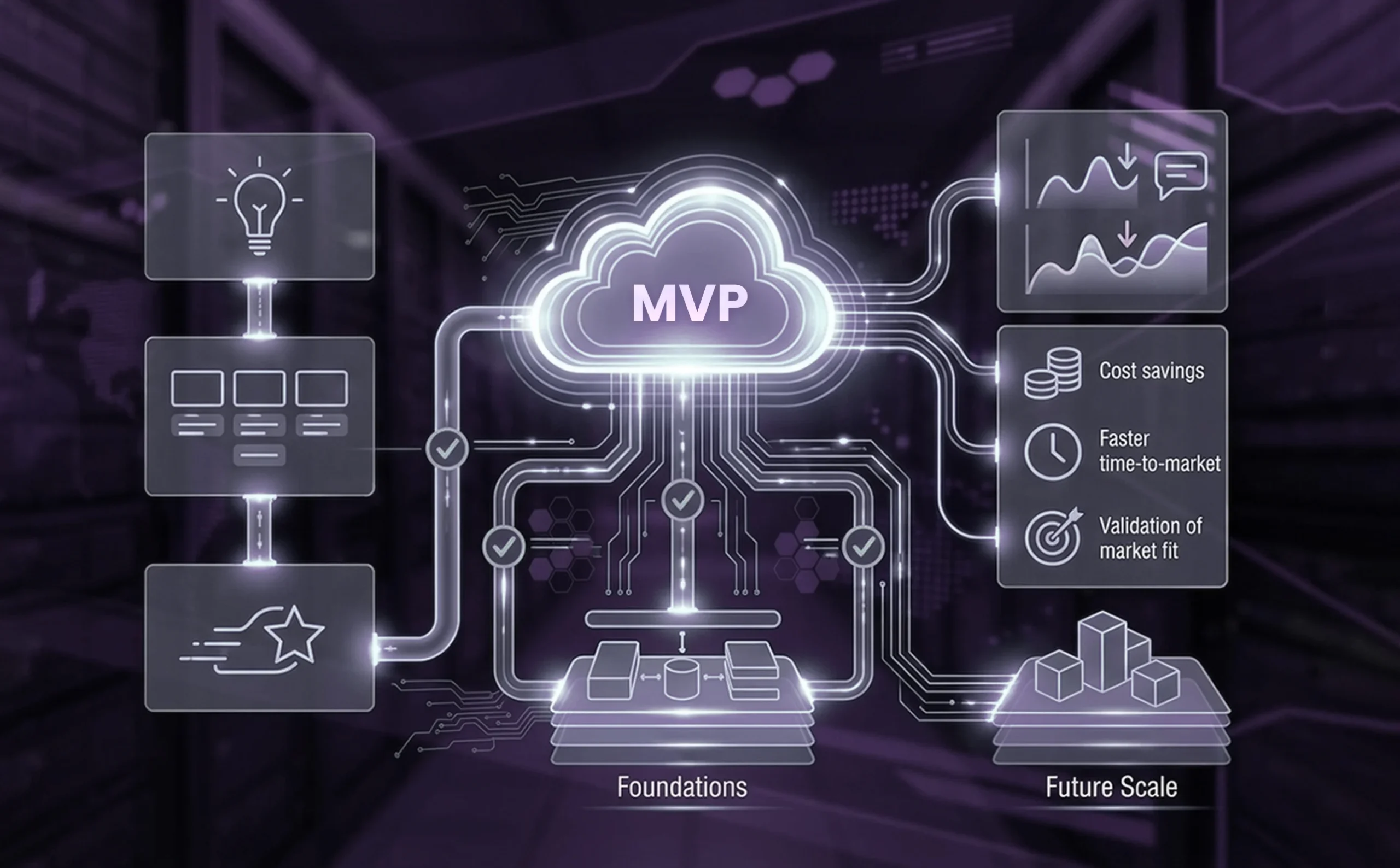
You can lose six months of funding by building features no one asked for. That risk grows when the runway is tight, the release pressure is high, and markets move quickly. Teams working with Bytes Technolab, an AI-first Product Engineering and Digital Transformation partner, validate earlier and avoid wasted effort.
What a Minimum Viable Product Really Means
A Minimum viable product is the smallest version of your idea that can test one clear market assumption with real users. It exists to generate proof, not to impress.
That distinction changes how teams build. A smaller product still wastes budget if it answers nothing useful.
Many founders treat an MVP as a cheaper version of the final product. That leads to unnecessary dashboards, admin panels, and features before proving core value.
Your MVP is a decision tool. It tells you whether users act, pay, return, or ignore what you built.
If 42% of startup failures come from a lack of market need, then the first release must focus on evidence. Early product decisions must answer behavior questions, not design preferences.
A London food delivery founder does not need advanced routing or loyalty features on day one. That founder needs proof that office workers will order lunch within a specific time window.
One narrow flow is enough. Search, order, pay, track, done. A prototype shows intention. An MVP shows real behavior.
The real question is not how little you can build. It is how quickly you can learn what deserves the next investment, which leads directly to why many teams fail early.
Why Product Development Fails Before Launch
Most Product Development failures begin with wrong assumptions about demand, not poor code. Teams overbuild before proving users care.
Early progress often looks convincing. Large feature lists create the illusion of momentum.
That illusion hides weak validation. A roadmap with many features says less than a simple tested user action.
Three patterns appear often:
- Teams add non-essential features before proving core value
- Founders set launch deadlines without defining success metrics
- Plans expand after investor input without new user signals
A SaaS team may spend twelve weeks building integrations and reports. Then, early users ignore the main workflow. That is not a design issue. It is a validation gap.
Time hides the real cost. One feature can delay testing, pricing validation, and user feedback.
MVP thinking changes this. It asks if every decision reduces uncertainty. Once failure is seen as a scoping issue, the next step becomes clearer.
How MVP Development Works Inside Real Product Development
MVP Development works through a learning loop that tests assumptions quickly and repeatedly. Each step exists to reduce uncertainty before scaling.
Effective Product Development Company follow a clear cycle. They define a belief, test it, measure behavior, and decide the next move.
A simple loop looks like this:
- Define one user’s belief
- Build one focused workflow
- Measure one clear signal
- Decide whether to continue or change
A Manchester B2B founder may start with one dashboard and one workflow. If users do not engage, the issue is not visual design.
It means the product solves the wrong moment. This insight is more valuable than a larger release. It prevents bigger mistakes.
MVP Development also aligns teams. Designers focus on visibility, engineers focus on stability, and founders focus on proof.
That alignment leads to better decisions about scope.
What to Include in Your Product Strategy for an MVP
Your product strategy must focus on delivering one clear outcome to one user group. Everything else waits until behavior supports expansion.
This is where most early budgets are lost. Teams try to prepare for scale before proving demand.
What Features Should an MVP Include?
An MVP includes only the features required to deliver and measure one core user outcome. Anything outside that goal delays learning.
A simple filter helps:
- Does this feature deliver core value?
- Can the user complete the task without it?
- Will it generate a measurable signal?
A UK fintech founder may want tax summaries and multi-user access early. The first release may only need invoice creation and payment confirmation.
That is enough to test trust and repeat use. Bytes Technolab often helps startups focus on proof rather than internal wishlists.
What Should You Leave Out First?
You should remove anything built for scale before demand exists. Early complexity delays validation.
Common exclusions include:
- Features requested by a single prospect
- Admin tools added without purpose
- Systems built for large-scale too early
MVP discipline can reduce development costs significantly. The saved budget supports better testing later.
This becomes even more relevant when AI enters the picture.
Why AI MVP Thinking Is Changing Validation
AI MVP thinking allows teams to test value before building full systems. Smaller workflows can validate demand faster than traditional approaches.
UK founders face pressure to show early traction. AI increases both opportunity and risk.
What Makes an AI MVP Different?
An AI MVP focuses on trust and output quality rather than feature breadth. Users must find the output useful before deeper investment.
A legal tech startup may start with one document type and one review flow. The goal is to see if users accept or reject the output.
Three early signals matter:
- Output acceptance rate
- Time saved per task
- Failure patterns
An AI travel assistant may look strong in demos but fail in real use. Early testing reveals these issues quickly.
AI MVP thinking speeds up learning. It also forces sharper boundaries.
How to Start MVP Development Without Burning Budget
The best way to start MVP Development is to define the user, problem, action, and success metric before building anything. That order protects the budget and focus.
Many founders do the opposite. They begin building without clear validation goals.
How Should Founders Approach the First Build?
Founders should treat the first build as a decision sequence, not a launch race. Each step must answer a clear question.
A practical plan:
- Define one user segment
- Write one clear product promise
- Choose one success metric
- Remove unnecessary features
After that, choose execution support. Some teams use internal leads, while others use mvp development services for startups when speed or expertise is required.
MVP development services in UK differ widely. Some focus on delivery, others focus on decision support.
Bytes Technolab supports this stage through structured scoping, technical planning, and feedback-driven iteration. That support helps founders avoid early missteps.
The first release should teach something valuable before the next investment.
Build to Learn Before You Scale
An MVP matters because it replaces assumptions with evidence. It turns your first release into a test of behavior and demand.
That shift changes how decisions are made. Teams focus on proof instead of feature volume.
For startups and scale-ups, this protects runway and avoids early mistakes. It prevents locking in the wrong direction.

Bytes Technolab works with teams that need clarity before execution. As an AI-first Product Engineering and Digital Transformation partner, it helps define scope, validate ideas, and guide product direction.
A focused first build gives you something stronger than a launch. It gives you confidence to move forward.
Frequently Asked Questions
MVP in product development stands for minimum viable product. It describes the smallest workable version of your idea that can test a key assumption with real users. Founders use it to reduce risk, gather evidence, and decide where to invest next.
MVP development for a UK startup typically takes 60 to 90 days when the team focuses on a single problem and tight scope. Timelines stretch when discovery is skipped, scope balloons, or multiple audiences are tackled instead of one priority user.
An MVP is a working product that real users can adopt, while a prototype is a low risk model used for early feedback. Product development teams rely on prototypes to refine ideas, then ship MVPs to collect behavioural data, validate demand, and inform future releases.
MVP build costs in the UK usually range from tens to low hundreds of thousands of pounds, depending on complexity and team structure. Using focused discovery, lean scope, and experienced MVP development services in UK helps keep budgets predictable while still delivering meaningful learning.
A startup MVP should include only features that support the core user journey and prove a sharp value proposition. Founders working with MVP development services for startups prioritise essentials such as signup, first value, and measurement, while placing cosmetic extras and advanced options firmly in the backlog.
You validate an MVP idea by talking to target users, testing simple prototypes, and running small experiments before a full build. A clear product strategy combines interviews, landing page tests, and price signals so you invest engineering time only after consistent evidence appears.
Bytes Technolab supports startups by combining structured discovery, focused MVP builds, and practical AI integration. Funded founders, scale ups, and mid enterprises gain clear scope, realistic timelines, and products that withstand investor questions, so each release moves them closer to reliable traction.
A Product Discovery Workshop is a short, intensive collaboration that turns scattered ideas into a clear MVP plan. Founders who run one before build gain aligned priorities, sharper scope, and fewer missteps, which is especially valuable when every week of runway matters.
Table Of Content
- What a Minimum Viable Product Really Means
- Why Product Development Fails Before Launch
- How MVP Development Works Inside Real Product Development
- What to Include in Your Product Strategy for an MVP
- What Features Should an MVP Include?
- What Should You Leave Out First?
- Why AI MVP Thinking Is Changing Validation
- What Makes an AI MVP Different?
- How to Start MVP Development Without Burning Budget
- How Should Founders Approach the First Build?
- Build to Learn Before You Scale