

 May 19, 2026
 2 mins to read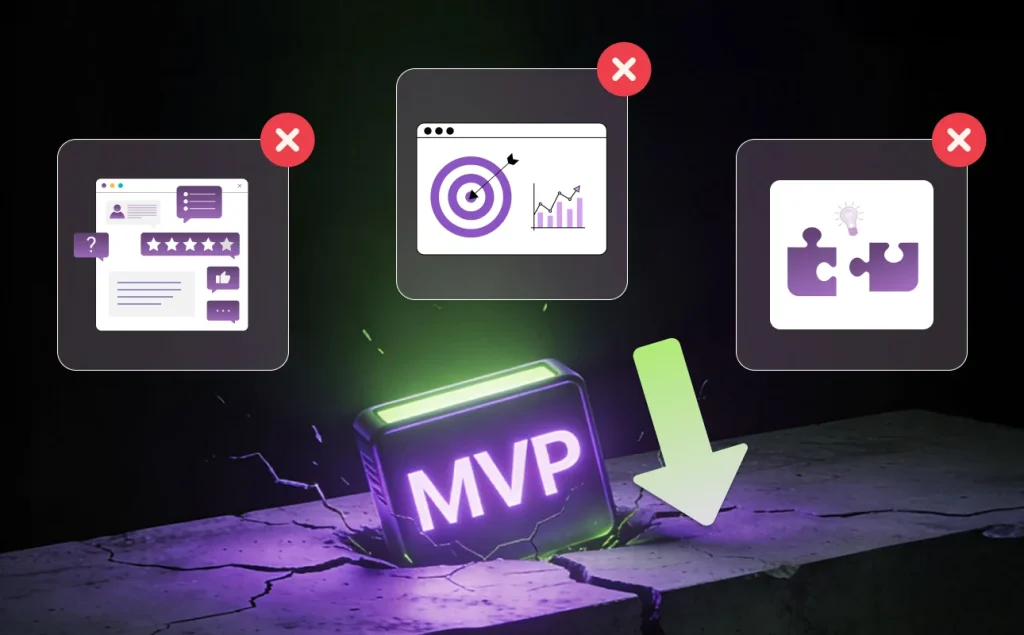
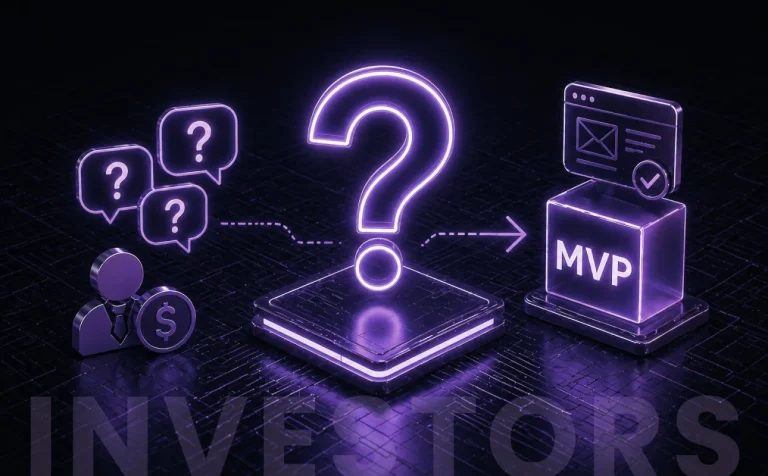
You raised funding, but the real risk is building something no one actually needs.
Most founders assume speed wins, yet 42% of startups fail because there is no market need. You will see how structured discovery reshapes decisions before a single line of code is written. Teams working with Bytes Technolab, an AI-first Product Engineering partner, reduce misalignment and move faster toward a validated MVP.
Why Most MVPs Fail Before They Even Reach the Market
Most MVPs fail because they solve the wrong problem, not because they are poorly built.
The data is blunt: 42% of startups fail due to a lack of market need, and seven out of ten digital products fail within the first year.
Speed feels productive. It is often expensive guesswork. Founders confuse momentum with validation.
What Do Founders Get Wrong Before Building?
They assume demand instead of proving it with real users.
In practice, teams spend 3 to 6 months building features before speaking to 10 actual customers.
That gap kills clarity early.
Common Pre-MVP Mistakes
- Building 10 features before validating one core use case
- Skipping user interviews and relying on internal assumptions
- Treating prototypes as market validation
The real failure happens before development even starts, which leads directly to how a Product Discovery Workshop changes the outcome.
What Actually Happens Inside a Product Discovery Workshop and Why It Changes Everything
A digital product discovery workshop replaces assumptions with structured decisions.
It is not a brainstorming session. It is a system that forces alignment across founders, product teams, and technical stakeholders.
What Decisions Are Made Inside the Workshop?
The workshop defines what should be built, what should not, and why.
Teams typically compress 4 to 6 weeks of scattered thinking into 3 to 5 focused days.
A SaaS development startup in Austin reduced the feature scope from 22 ideas to 6 validated features in a single workshop cycle.
Core Outputs You Walk Away With
- Clear problem statement tied to user pain
- Defined user personas with real scenarios
- Prioritized MVP feature list based on impact
You stop asking “What can we build?” and start asking “What must we prove first?”
That shift brings us to how that thinking turns into a repeatable product discovery process for MVP.
The Product Discovery Process for MVP: From Idea to Validated Direction
The product discovery process for MVP moves from assumption to validation through structured stages.
Each stage exists to remove one layer of uncertainty before development begins.
What Are the Stages That Actually Matter?
The process follows five steps that build directly on each other.
Skipping even one creates blind spots that show up later as rework or wasted budget.
The Five-Step Flow
- Problem definition with measurable user pain
- User research with 10 to 15 real interviews
- Solution ideation mapped to specific use cases
- Validation through prototypes or early testing
- Roadmap creation with MVP scope locked
A fintech startup in New York validated demand within 14 days by testing a landing page with 120 users before building anything.
That single step saved nearly $80,000 in unnecessary development.
Process alone does not guarantee good decisions. That is where a product discovery framework separates disciplined teams from expensive guesswork.
The Product Discovery Framework That Separates Smart MVPs from Expensive Mistakes
A product discovery framework defines how decisions are made, not just what steps are followed.
It introduces discipline into prioritization, risk validation, and trade-offs.
How Do You Decide What Makes the MVP?
The best teams use a value-versus-risk lens to filter every feature.
If a feature does not validate a critical assumption, it does not belong in the MVP.
The Three-Question Decision Filter
- Does this feature prove user demand within 30 days?
- Does it reduce a core business risk, such as monetization?
- Can it be tested with fewer than 100 users?
If the answer is no, it is not MVP material.
Teams working with Bytes Technolab apply this discipline during workshops to prevent feature creep and keep scope grounded in validation goals.
Frameworks alone do not explain the deeper shift happening in how startups approach MVPs today.
The Insight Most Founders Miss: Discovery Is Not About Features, It Is About Eliminating Risk
Discovery exists to eliminate uncertainty before capital is committed.
It is a risk-reduction system, not a feature-planning exercise.
Why Does Discovery Reduce Failure Rates So Drastically?
It replaces assumptions with tested evidence before scaling decisions are made.
Structured MVP strategies can reduce failure rates by up to 60% when validation happens early.
A healthcare startup avoided a full rebuild after discovering through early testing that 70% of users misunderstood the onboarding flow.
Fixing that insight during discovery took 3 days. Fixing it post-launch would have taken 3 months.
You are not building a product. You are removing reasons for it to fail.
That shift makes choosing the right product idea validation services and Software Product discovery services a critical decision.
How to Choose the Right Software Product Discovery Services for Your MVP
The right software product discovery and MVP development services in the USA reduce uncertainty, while the wrong ones delay decisions without clarity.
You are not buying workshops. You are making better decisions before development starts.
What Should You Look For Before You Commit?
The service must produce outcomes you can act on immediately.
Anything vague or overly theoretical is a warning sign.
What Good Discovery Services Include
- Defined MVP scope with feature prioritization logic
- Evidence from real user validation, not assumptions
- A roadmap tied to business goals and timelines
Red Flags to Watch
- Workshops with no measurable outputs
- Overfocus on design without validation
- No involvement from technical decision-makers
Typical timelines range from 1 to 3 weeks for focused discovery, while scattered approaches stretch beyond 6 weeks without clarity.
Once clarity exists, the final question is how it turns into a scalable MVP.
From Clarity to Execution: Turning Discovery Into a Scalable MVP
Validated discovery turns into execution when decisions translate directly into build priorities.
The transition works only when discovery outputs are specific, measurable, and tied to engineering.
A clear MVP scope reduces development cycles by up to 40% because teams build only what has been validated.
Startups that move from discovery to execution without reinterpretation avoid rework, delays, and budget overruns.
Bytes Technolab connects discovery outputs directly with AI-first product engineering workflows, ensuring that what gets validated is exactly what gets built.
That is where most founders finally regain control over time, cost, and product direction.
The Decision That Protects Your Runway
You started with urgency. You now have clarity.
Building fast without validation burns capital. Structured discovery protects it and directs it.
Bytes Technolab works with startups, scale-ups, and mid-sized enterprises to turn early-stage uncertainty into validated MVP strategies, combining AI-first thinking with product engineering discipline to reduce risk and accelerate meaningful progress.
The next step is not more planning. It is deciding whether your current MVP direction has been tested enough to deserve your budget.
Frequently Asked Questions
A Product Discovery Workshop is a structured process where founders, product teams, and technical stakeholders align on what to build and why. It compresses weeks of scattered thinking into focused sessions that produce a validated problem statement, user personas, and a prioritized MVP feature list.
Teams work through problem definition, user research, solution ideation, and MVP scoping across 3 to 5 focused days. The outputs are concrete: a clear problem statement, validated personas, and a prioritized feature list. Product discovery services structure each session so decisions are traceable and defensible.
MVP scope gets defined by filtering every feature through a value-versus-risk lens. Software Product discovery services use structured criteria: does this feature prove demand, reduce a core business risk, and test with fewer than 100 users? Features that fail all three do not make the MVP.
Skipping discovery means building on unverified assumptions, and 42% of startups fail for exactly that reason. The product discovery process for MVP removes one layer of uncertainty per stage before any development budget is spent. Validated direction costs far less than rebuilding after launch.
Bytes Technolab runs discovery workshops for funded startups, scale-ups, and mid-sized enterprises that need validated MVP direction before committing to development. Each engagement delivers a scoped feature list, a tested problem statement, and a roadmap built on real user evidence, not internal assumptions.

Mitul Patel
Founder & CEO at Bytes Technolab Inc.
17+ years of experience in leading global digital initiatives by delivering transformative solutions across AI, ML, SaaS, product engineering, and enterprise-grade platforms. As a visionary strategist and mentor to 120+ tech experts, he has played a pivotal role in scaling Bytes Technolab’s presence in the USA, Canada, India, and beyond. Under his leadership, the company has delivered 300+ business-critical solutions for 500+ clients in 30+ countries, driving revenue growth through innovation in web, mobile, eCommerce, and digital transformation. Mitul combines business acumen with deep technical insight to help global startups, SMEs, and Fortune 500 enterprises accelerate their digital journeys.
Table Of Content
- Why Most MVPs Fail Before They Even Reach the Market
- What Do Founders Get Wrong Before Building?
- What Actually Happens Inside a Product Discovery Workshop and Why It Changes Everything
- What Decisions Are Made Inside the Workshop?
- The Product Discovery Process for MVP: From Idea to Validated Direction
- What Are the Stages That Actually Matter?
- The Product Discovery Framework That Separates Smart MVPs from Expensive Mistakes
- How Do You Decide What Makes the MVP?
- The Insight Most Founders Miss: Discovery Is Not About Features, It Is About Eliminating Risk
- Why Does Discovery Reduce Failure Rates So Drastically?
- How to Choose the Right Software Product Discovery Services for Your MVP
- What Should You Look For Before You Commit?
- From Clarity to Execution: Turning Discovery Into a Scalable MVP
- The Decision That Protects Your Runway