

You have funding, a deadline, and one question nobody says out loud: what if the market does not want this? That fear is harder to manage than the build itself. Bytes Technolab, an AI-first Product Engineering partner, helps UK founders structure products to answer it before the runway runs out.
The Real Reason Founders Burn Budget Before Launch
Most founders who overspend on MVP product development do not do it because they hired bad developers. They do it because they locked a full-scope build around assumptions that were never tested.
When a founder believes the product is right, every feature feels essential. Discovery gets skipped, scope expands, and six months of engineering ships to users who never asked for it.
Why Does Assumption-Driven Scoping Cost So Much?
Unvalidated assumptions do not cost money at the point of decision. They cost money at the point of delivery, when architecture, UI, and onboarding are already built around bets that nobody checked.
CB Insights data shows 42% of startups fail due to a lack of market need. That is not a failure of execution.
It is a failure of assumption validation, and it happens to technically competent teams every day.
The fix is not to build less. It is to build in a different order, starting with the assumptions that carry the highest financial risk if wrong.
What MVP Actually Protects and What It Does Not
An MVP is a risk instrument, not a budget shortcut. Most founders treat it as the cheaper version of the full product, and that single misread leads to the scoping decisions that destroy the runway.
When scoped as a stripped product, an MVP becomes a half-built version of the wrong thing delivered faster. Nothing about the core risk changes.
What Risks Does an MVP Actually Eliminate?
A properly scoped MVP eliminates two specific risks: market fit risk (does anyone want this?) and feature bloat risk (are we building the right things in the right order?). It does not eliminate technical feasibility risk, compliance exposure, or infrastructure risk in hardware-adjacent builds.
This matters especially for FinTech and HealthTech founders operating under FCA or MHRA oversight. In those cases, compliance must be scoped alongside the MVP, not deferred to a later version.
The question to ask before finalising any scope is not “what can we remove?” It is “what assumption, if wrong, would end this product?”
That question also points directly to where the budget disappears in a typical product development company UK engagement before a single user logs in.
Where Founders Actually Lose Money Using MVP Development Services
There are three predictable failure patterns in product builds, and each one has a moment where it could have been stopped. Most teams do not recognise that moment until the budget is already gone.
Across practitioner analyses, MVP development services can reduce initial build costs by up to 50% versus fully-featured product builds.
What Are the Three Cost Failure Points?
The first is the overscoped first build: a full feature set justified by confidence, not validation. Teams in this pattern typically spend between £60,000 and £90,000 before receiving a single meaningful user signal.
The second is skipped discovery: no user research, no assumption mapping, no defined success metric before work begins. Skipped discovery typically costs four to six weeks of rework after launch.
The third is premature scaling: team and infrastructure expansion before product signals justify the spend. This pattern is the most expensive because it compounds the cost of the first two.
The Three Cost Failure Points
- Overscoped first build: full feature set on unvalidated assumptions, typically £60,000 to £90,000 before first user feedback
- Skipped discovery: no user interviews, no success metric defined before work begins
- Premature scaling: team and infrastructure expansion before the product has proven demand
All three share one root cause: building before validating.

Start With a PoC If the Tech Itself Is the Risk
Most product articles skip this decision entirely: what if the core technology has not been proven yet? Building on unvalidated technical foundations is a different class of risk, with a different solution.
PoC Software Development exists to answer the question your product build cannot: does this technology perform the way you are assuming?
A PoC tests the machine, not the market.
When Should You Build a PoC Before the Product?
You need a PoC before your product build, when you cannot point to a working example of your core technical component performing at the scale your plan requires within 12 months. If the honest answer is “we think so,” you are carrying technical risk into your entire budget.
A PoC typically runs four to eight weeks and costs a fraction of what a failed build sprint costs when a fundamental technical assumption breaks mid-project.
What a PoC Answers That a Product Build Cannot
- Does the core technology perform as expected under realistic load?
- Are integrations between key components stable enough to build on?
- What are the actual infrastructure requirements, not the estimated ones?
- Are there licensing or open-source dependency issues that would surface later?
Once the technical question is settled, the next decision is scope.
How to Scope a Product That Actually Reduces Risk
Right scoping is not about cutting features. It is about identifying which parts of the build test the assumption that the product’s survival depends on, and building only those first.
The logic works in three steps: name every assumption baked into the concept, rank them by consequence, then scope the build to test only the ones that would collapse the product if wrong.
How Do You Know What Belongs in the First Build?
A feature belongs in the first build if removing it would make the product unable to meet the primary assumption. A feature does not belong if it makes the product nicer without affecting whether that assumption holds.
Product Discovery sessions run by Bytes Technolab with funded startups and scale-ups typically remove 30% to 40% of originally requested features before development begins. That reduction sharpens what the product is actually testing.
Before locking scope with any MVP development services partner, define success in one sentence: what user behaviour would tell you the build has worked?
What Comes After the Build and Why Your Product Development Company Choice Matters
A validated first product is not a finished product. It is proof that the problem is real and the approach is worth continuing toward custom saas development or a scaled platform.
The path to a scaled product typically starts when data shows strong retention in a specific segment, a repeatable activation pattern, and a commercial signal worth backing.
What Should You Look for in a Product Development Company?
The right product development company for post-build work is the one that built the first version with extensibility in mind, not the one that delivered the cheapest, fastest version. Architecture decisions made early compound into every future sprint.
When evaluating a software product development company for scale-up work, ask one direct question: if a full rebuild were needed today, what would it cost and why? Awareness of digital product development trends also signals whether the team thinks ahead or just ships to spec.
That answer reveals how the team thinks about long-term product ownership. The right choice is the one that builds for where the product is going, not just where it is today.

The Cheapest Product Is the One That Finds the Market
You started with a specific fear: spending £50,000 to £80,000 on something the market does not want, then explaining that to the people who gave you the money. That fear is exactly what happens when a product is built before its assumptions are tested.
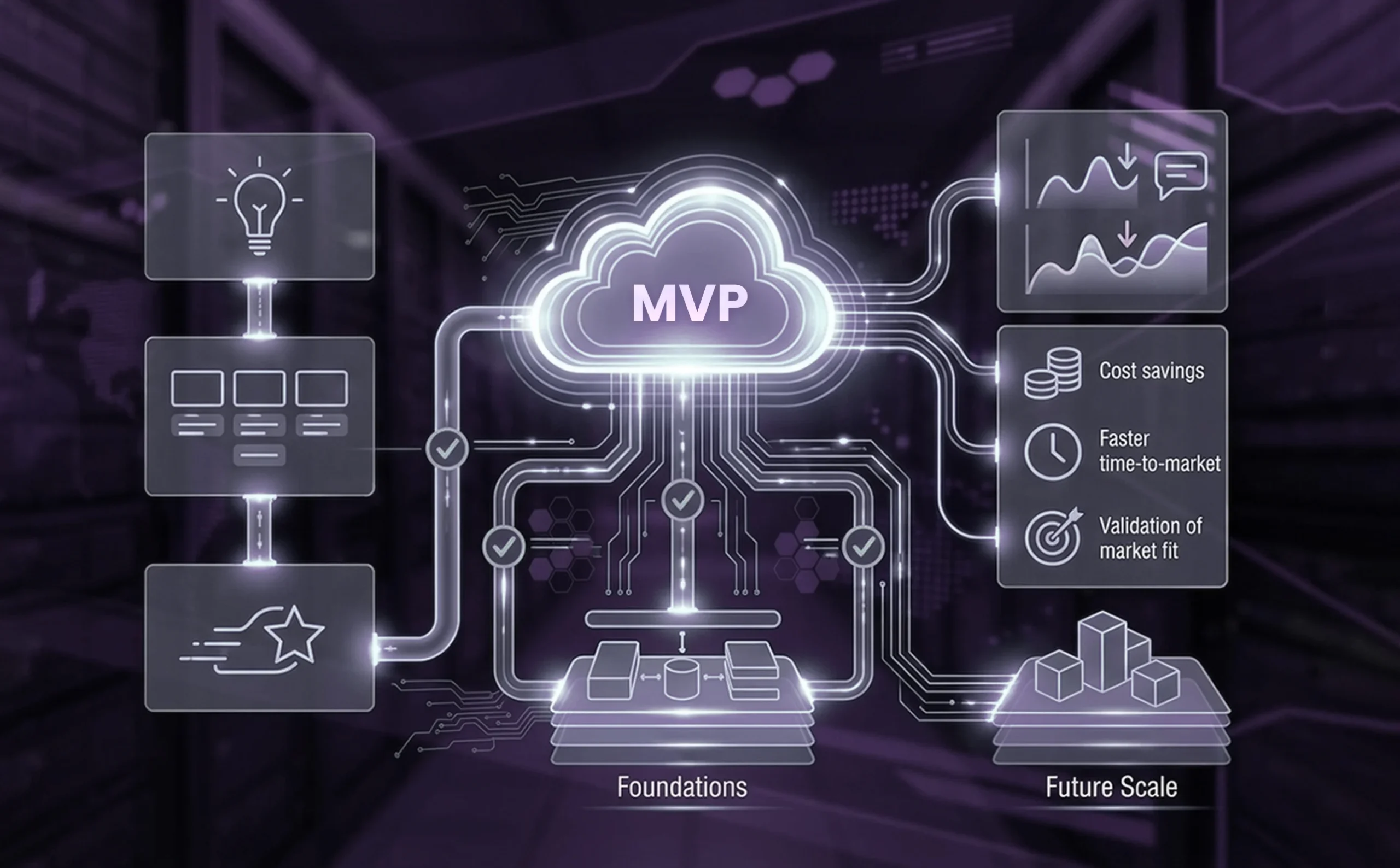
The structured approach covered here changes that sequence: PoC first if technical risk exists, well-scoped build second, discovery before either.
Bytes Technolab works with funded startups, scale-ups, and mid-enterprises across the UK as an AI-first Product Engineering partner. The team brings PoC Development, Product Discovery, and build scoping under one roof, with context carried through from the first technical decision to the final sprint.
The next step is a working call where your product assumptions get mapped, your scope gets pressure-tested, and you leave with a clear view of what to build first.